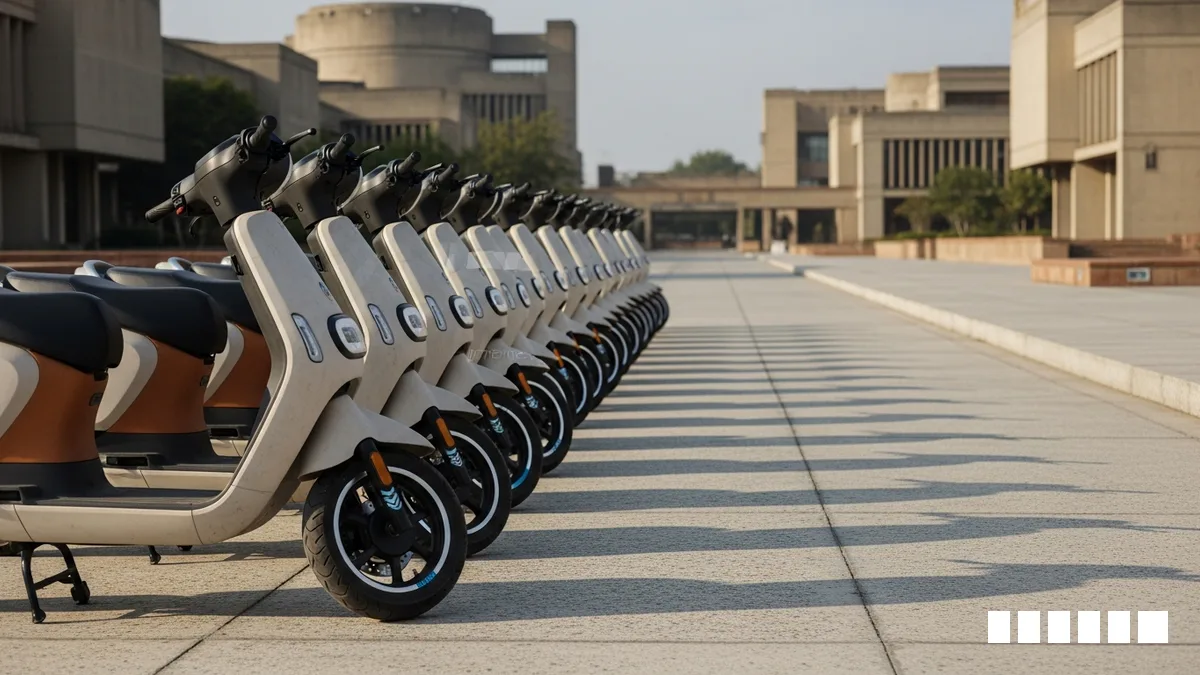
Lead-acid vs lithium for a low-speed scooter: which battery is worth it?
When someone buying a low-speed scooter in Chandigarh, Mohali, or Panchkula asks "lead-acid or lithium," they are usually looking at two variants of the…
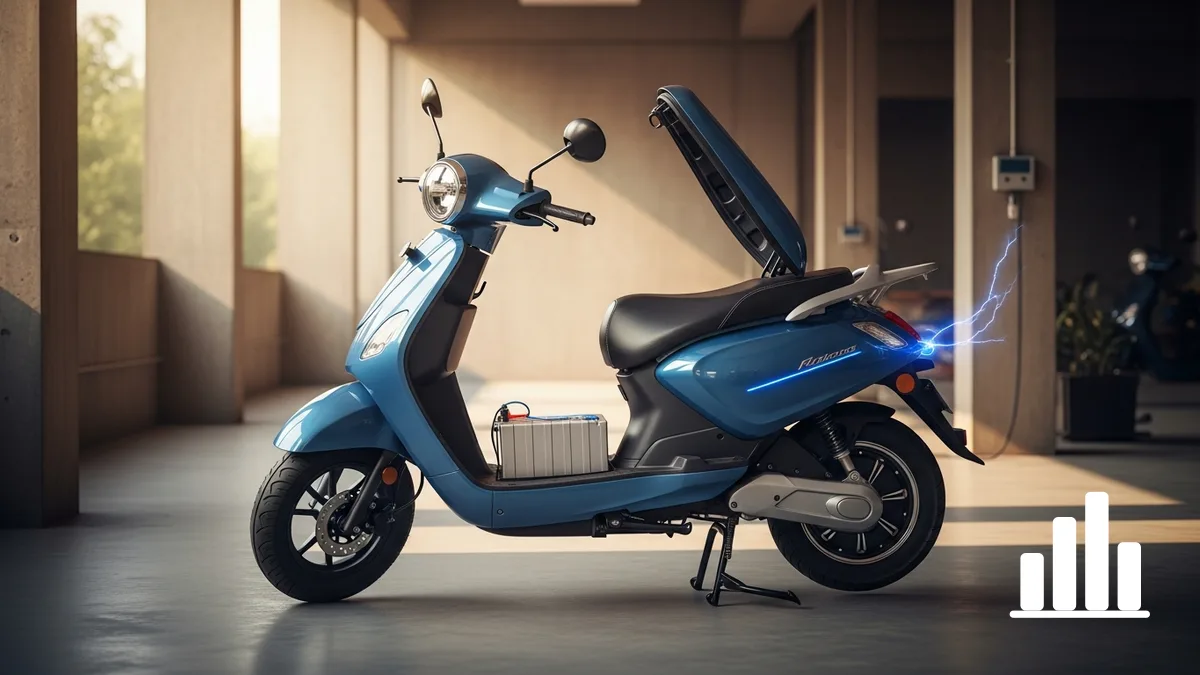
What you are actually comparing
When someone buying a low-speed scooter in Chandigarh, Mohali, or Panchkula asks “lead-acid or lithium,” they are usually looking at two variants of the same model sitting side by side in a showroom. The lithium version costs more on the sticker. The lead-acid version looks like the sensible choice. Whether it actually is depends on how far you ride every day and how long you plan to keep the scooter. This article works through the numbers honestly so you can decide for yourself.
What both battery types have in common here
Every low-speed scooter in this class — models like the Zelio Gracy, X-Men+, and Logix — runs on a 250 W BLDC hub motor and is capped at 25 km/h. That combination, as specified under the Central Motor Vehicles Rules, means no licence, no RTO registration, no road tax, and no mandatory insurance. That exemption applies equally whether the scooter carries a lead-acid pack or a lithium-ion pack. The battery chemistry you choose does not affect your legal standing on the road.
The running cost per kilometre is also broadly the same for both types. At approximately Rs 5 per unit — which is a fair all-in basis for Tricity households once you account for the JERC tiered tariff in Chandigarh, PSPCL rates in Mohali (around Rs 5.40 per unit), and comparable Haryana rates in Panchkula — a full charge of roughly 2 units costs about Rs 10. Over a range of around 60 km, that works out to approximately Rs 0.17 per km, per the charging cost data verified against the JERC tariff order effective November 2025. Compare that with Rs 150–200 of petrol to cover the same distance on a conventional scooter.
So both variants run cheap. The question is which one costs less over the life of ownership.
The upfront gap
On a low-speed scooter, the lithium-ion variant of the same model typically costs roughly Rs 10,000–20,000 more than the lead-acid version ex-showroom — call it about Rs 15,000–17,000 on a mid-range frame. The exact gap varies by model, voltage and Ah rating, so confirm the figures for whichever model you are considering, as prices vary by state and change over time.
One point worth noting: because low-speed scooters are CMVR-exempt, the on-road price equals the ex-showroom price. There is no RTO registration or green number plate, and no mandatory insurance premium you are required to add. The recurring saving is the avoided insurance — roughly Rs 1,500–3,000 a year — on top of a modest one-time registration/plate saving. (Road tax is Rs 0 on a Tricity electric two-wheeler even when registered, so it is not a low-speed-only saving.) This applies to both variants equally.
Where the two battery types genuinely differ
Weight
Lead-acid packs are significantly heavier than lithium-ion packs of equivalent capacity. On a 25 km/h scooter used mostly for short urban trips — grocery runs, school drop-offs, Sector 17 to Sector 22 — the extra weight makes the scooter feel sluggish, affects handling, and in practical terms reduces real-world range below the rated figure. Lithium packs are noticeably lighter. If you or a family member will be parking the scooter up a kerb or manoeuvring it in a tight stairwell space, that difference is felt every single day.
Charge time
Lead-acid or gel batteries typically need 7–12 hours for a full charge. Lithium-ion packs charge in 4–5 hours on a standard home socket. For someone who commutes in the morning and wants the scooter ready again by evening, the faster charge time of a lithium pack is a practical advantage, not just a specification on a brochure.
Cycle life and replacement cost
This is the number that changes the total-cost calculation most significantly. Lead-acid batteries in this class typically last 300–500 charge cycles before capacity degrades noticeably. Lithium-ion packs commonly deliver 1,000 cycles or more. In plain terms: if you charge the scooter once a day, a lead-acid pack may need replacement within two years. A lithium pack, used and charged correctly, can last considerably longer. Battery replacement is not cheap. When you factor in the cost of one or more lead-acid replacements over the ownership period, the lithium pack’s higher upfront price often works out to a lower total spend.
Range
The rated range figures for lithium variants are generally equal to or higher than lead-acid variants on the same model. The Zelio X-Men+, for example, is listed at 120 km rated range on both battery types, but real-world range on a heavier lead-acid pack — particularly with two riders, a headwind, or hilly terrain — will fall further short of the rated figure than on a lithium pack.
The 60 km/day rule of thumb
The data from the models verified for this article includes a clear guidance note: for daily distances above approximately 60 km, choose lithium-ion over lead-acid for better range, longer life, and lower weight. This is a practical threshold, not a marketing line.
Below 60 km per day — which covers most in-city commutes in Chandigarh, Mohali, or Panchkula — a lead-acid scooter will complete your daily run. The lower upfront cost is real, and if you are a student or pensioner doing 15–20 km a day with access to overnight charging, the economics of lead-acid are not unreasonable, provided you budget for battery replacement within the ownership period.
Above 60 km per day — delivery riders covering multiple localities, shopkeepers doing rounds, anyone whose route reliably stretches past Zirakpur or across the Madhya Marg and back — the lithium pack is the more sensible investment. The Zelio Logix, for instance, is listed with a range of up to approximately 140 km on its top lithium variant and is noted as suited for delivery and business use in the 40–50 km per day range. If your actual usage is higher, verify the exact variant range with the dealer before purchase.
An honest total-cost-over-life view
The table below uses approximate figures for illustration. Verify current prices before any purchase decision.
| Lead-acid variant | Lithium-ion variant | |
|---|---|---|
| Upfront price (same model) | Lower | Roughly Rs 10,000–20,000 more |
| Registration / road tax / insurance (mandatory) | Nil — CMVR exempt | Nil — CMVR exempt |
| Approximate charge cost per km | Rs 0.17 | Rs 0.17 |
| Typical battery life | 300–500 cycles | 1,000+ cycles |
| Likely battery replacement within 3–4 years of daily use | One replacement probable | Not typically required |
| Charge time | 7–12 hours | 4–5 hours |
| Weight penalty | Higher | Lower |
The lead-acid variant costs roughly Rs 10,000–20,000 less upfront. But one lead-acid replacement pack over the ownership period is likely to close much or all of that gap, and possibly exceed it. The lithium variant, if it avoids that replacement cost, ends up cheaper in total — while also being lighter and faster to charge throughout.
This is not a guarantee. It depends on how you charge (shallow cycles are gentler on both battery types), whether you store the scooter over long periods with a depleted pack, and on the replacement cost of packs at the time you need them. The principle, however, is sound: the sticker price is not the whole cost.
What does not apply here
It is worth being clear about one thing that often causes confusion. The PM E-DRIVE scheme — the central government incentive currently running under the Ministry of Heavy Industries — applies only to registered high-speed electric two-wheelers with a lithium-ion battery and an ex-factory price up to Rs 1.5 lakh. Low-speed scooters of this class are CMVR-exempt, are not registered with any RTO, and do not qualify for PM E-DRIVE, regardless of whether they carry a lithium pack or a lead-acid pack. The value of a low-speed scooter is the costs you avoid — no registration, no road tax, no licence, no mandatory insurance — not a subsidy. Do not let any seller suggest otherwise.
A note on the 250 W / 25 km/h dual condition
The CMVR exemption that removes the need for a licence and registration requires both conditions to be met simultaneously: top speed 25 km/h or less, and motor rated at 250 W or less (continuous). Speed alone is not sufficient. A scooter physically capped at 25 km/h but fitted with a motor rated above 250 W is still classified as a registrable motor vehicle under the Central Motor Vehicles Rules. This is the most common misunderstanding in this category. When buying, verify the motor wattage on the specification sheet, not just the claimed top speed. All models in the Zelio low-speed line are specified at 250 W, but this is a principle worth applying to any low-speed scooter you compare.
Which one, then
- Choose lead-acid if your daily distance is reliably under 40–50 km, you have access to overnight charging, your budget is tight, and you are comfortable setting aside money for a battery replacement within two to three years of regular use.
- Choose lithium if you ride above 60 km per day, need the scooter ready within a few hours of returning home, want to keep the scooter for several years without a major mid-life expense, or simply find the weight difference meaningful for your daily use.
If you are on the fence and your daily distance is 50–60 km, the lithium pack is likely the safer choice — the range buffer, the lighter weight, and the avoided replacement cost collectively justify the higher upfront spend for most buyers in that range.
Prices, range figures by variant, and battery options vary by model and by dealer. Confirm the exact specifications and ex-showroom price for the variant you are considering before deciding. For current pricing and availability in Chandigarh, Mohali, and Panchkula, visit evchandigarh.com.
Sources
- Central Motor Vehicles Rules (CMVR) — low-speed exemption criteria (250 W / 25 km/h dual condition); cross-verified June 2026
- Joint Electricity Regulatory Commission (JERC) / Chandigarh Power Distribution Ltd — five-year tariff order FY 2025-26 to 2029-30, effective 1 November 2025; reported in The Tribune, October/November 2025
- PSPCL (Punjab) domestic tariff — approximately Rs 5.40 per unit for first 300 units
- PM E-DRIVE scheme — PM E-DRIVE portal (pmedrive.heavyindustries.gov.in) and trade press; June 2026
- Zelio E-Mobility model specifications and pricing — zelioebikes.com official and trade listings; verified June 2026
- Charging cost and per-km running cost calculation — derived from JERC tariff and Zelio/EV India guidance; June 2026
Independent editorial — EV Chandigarh doesn't sell vehicles. We explain the rules and the numbers, then point you to where to buy.