Battery replacement cost and life: what a low-speed EV battery really costs to renew
When you budget for a low-speed electric scooter, the ex-showroom price is only part of the story. The battery is the single most expensive component, and…
Why the battery question matters more than the sticker price
When you budget for a low-speed electric scooter, the ex-showroom price is only part of the story. The battery is the single most expensive component, and it will need replacing before the scooter itself wears out. Understanding how long each battery chemistry lasts, and what a replacement will cost, is the difference between a genuinely affordable commuter and an unexpected bill that catches you off guard. This article walks through what you need to know — in plain numbers, without guesswork.
Two battery chemistries, two different ownership profiles
Low-speed scooters in the class covered here — those at 25 km/h or below with a motor rated at 250W or less — typically come with one of two battery types.
Lead-acid (including sealed gel variants)
Lead-acid packs are heavier and require longer charging times — around 7 to 12 hours for a full charge. Their principal advantage is a lower upfront cost: on the same model, the lead-acid variant is typically priced below its lithium counterpart. However, the useful life of a lead-acid battery in daily two-wheeler use is shorter. As a general guidance across the industry, expect a lead-acid pack to last roughly 1.5 to 2 years under regular daily use, or approximately 300 to 500 charge cycles, before capacity drops enough to affect range meaningfully. You should confirm the specific warranty and expected cycle count for any model you are considering directly with the dealer, as these figures vary by pack size and manufacturer.
Lithium-ion
Lithium-ion packs charge faster — around 4 to 5 hours — and are significantly lighter, which helps handling on a low-speed scooter. More importantly for ownership costs, lithium batteries last considerably longer. Industry guidance for lithium packs in this class places useful life at roughly 3 to 5 years of daily use, or around 1,000 to 1,500 charge cycles, before meaningful range degradation sets in. Lithium carries a higher entry price: on the same frame, the lithium variant typically costs roughly Rs 10,000 to Rs 17,000 more than the lead-acid version, which gives a rough sense of what the lithium premium looks like at the point of purchase.
The trade-off is straightforward: lead-acid costs less to buy but will need replacing sooner and more often. Lithium costs more upfront but stretches the replacement interval significantly.
When to expect a replacement
There is no fixed calendar date, because battery life depends heavily on how the scooter is used. The factors that shorten battery life most quickly are:
- Regular deep discharging (running the battery flat before charging)
- Leaving the battery fully discharged for long periods
- Frequent fast or improper charging
- Storing the scooter in sustained high heat, which is relevant during Tricity summers
A practical rule of thumb: if the range on a full charge has fallen to noticeably less than what it was in the first few months — say, consistently delivering 40 km when it once gave 60 km — the battery is entering the replacement window. The Zelio Logix, for instance, is rated at 60 to 90 km on its entry variant; when real-world range drops well below 60 km on a verified full charge, the pack is degrading.
Lead-acid users in Chandigarh, Mohali, and Panchkula who ride 20 to 30 km a day — a typical daily commute within the Tricity — should plan for a replacement somewhere between 18 and 30 months. Lithium users on comparable usage patterns can reasonably expect to reach three to four years before replacement becomes necessary. These are planning estimates; ask your service centre for a battery health check if you are unsure.
What a replacement battery actually costs
This is where the data layer runs thin, and honesty requires saying so clearly. Battery replacement prices are not standardised across the industry and vary by pack voltage, capacity, chemistry, and the service centre you approach. The figures below are a framework for budgeting, not firm quotes.
Lead-acid replacement packs
For the 60V or 72V lead-acid packs used in scooters in this class, indicative market prices for a replacement pack (supply and fitment) typically fall somewhere in the range of Rs 8,000 to Rs 15,000, depending on the voltage and Ah rating. A larger 72V/42Ah gel pack will sit toward the higher end of that range. Confirm exact prices with your authorised service centre before budgeting.
Lithium-ion replacement packs
Lithium replacement packs are more expensive. For packs in the 60V–72V range at 32Ah to 40Ah capacity, expect indicative replacement costs broadly in the range of Rs 18,000 to Rs 30,000 or more for supply and fitment. Prices for lithium chemistry have been falling over recent years, but the range here is wide because pack specifications vary considerably across models. Again, confirm locally before treating any figure as final.
The critical point for budgeting
Even at the higher end of the lithium replacement estimate, the ownership maths still tend to work in the scooter owner’s favour when you factor in running costs. At roughly Rs 5 per unit all-in (the realistic basis for Tricity households, per the JERC tariff order for Chandigarh and comparable PSPCL rates in Mohali), a full charge costs around Rs 10 for approximately 2 units consumed. That works out to about Rs 0.17 per km over a 60 km range. Over, say, 40,000 km of riding — a reasonable lifetime figure for this class of scooter — the running cost saving over petrol is substantial enough to absorb one or two battery replacements and still come out ahead. The point is not to ignore battery replacement costs; it is to include them honestly in your lifetime ownership calculation rather than comparing only the purchase price to a petrol scooter.
Budgeting for battery replacement over the scooter’s life
Here is a practical way to think about the total cost:
-
Lead-acid owner, daily urban rider: Plan for one replacement every 18 to 30 months. Over five years of ownership, that likely means two replacement cycles. Budget accordingly — and factor in that each replacement also involves downtime and a service visit.
-
Lithium owner, daily urban rider: Plan for one replacement somewhere between years three and five. Over five to seven years, that may mean a single replacement, or two if you keep the scooter long-term.
-
Avoid the false economy: Some owners switch from lithium to lead-acid at replacement time to save money upfront. This is understandable but worth thinking through carefully. Lead-acid packs are heavier, which affects the ride, and the shorter replacement cycle means the saving may be illusory over time.
-
Warranty coverage: Zelio’s warranty is stated as two years on the motor, controller, and frame on select models. Battery warranty terms vary by model and variant — confirm the specific battery warranty period with your dealer at the time of purchase, and keep your purchase documentation. A battery failing within the warranty period is a different financial situation from one failing after it.
The Tricity angle: what local riders should factor in
The Tricity’s riding conditions matter for battery life in ways a generic article would not tell you.
Chandigarh’s sector grid and Mohali’s IT corridor are well-surfaced and relatively flat — this is gentler on batteries than hilly terrain. Panchkula’s northern sectors, closer to the foothills, involve more gradient, which draws more from the battery on each trip.
Tricity summers push ambient temperatures well above 40°C for weeks at a time. Heat is the most damaging environmental factor for both lead-acid and lithium batteries. Parking in direct sun and charging a hot battery immediately after a long ride in peak summer will accelerate degradation. Wherever possible, let the scooter cool in shade before charging during May and June.
On electricity costs: Chandigarh’s JERC domestic tariff (effective 1 November 2025, under the five-year tariff order following CPDL privatisation) is tiered — lower-usage households on the first slab pay around Rs 2.75 per unit, while heavier use climbs to around Rs 4.80 to Rs 5.40 per unit. Mohali (PSPCL) runs at around Rs 5.40 per unit for the first 300 units. Panchkula (Haryana, UHBVN) is comparable. For running-cost calculations, Rs 5 per unit is a fair and slightly conservative all-in basis that accounts for fixed charges and electricity duty — it applies honestly across all three Tricity areas.
One more point worth noting: low-speed scooters meeting both the 25 km/h speed limit and the 250W motor rating under the Central Motor Vehicles Rules are exempt from RTO registration and mandatory insurance, and carry no green number plate. The recurring avoided cost is the mandatory insurance — roughly Rs 1,500 to Rs 3,000 a year — on top of a modest one-time registration/plate saving. (Road tax is Rs 0 on a Tricity electric two-wheeler even when registered.) That is worth remembering when you compare the total ownership cost to a petrol scooter or a registered high-speed EV.
What to ask your dealer before buying
Before you commit to a model and battery variant, ask these questions at the dealership:
- What is the battery warranty period and what does it cover?
- What is the current price of a replacement pack for this specific model and variant?
- Is a lithium upgrade available if I buy lead-acid now?
- Does the service centre stock replacement packs, or is there a lead time?
- What does a battery health check cost, and how often is it recommended?
Getting answers to these in writing at the point of purchase saves difficult conversations later.
Sources
- Central Motor Vehicles Rules (CMVR) — low-speed exemption criteria (speed and motor power thresholds)
- Joint Electricity Regulatory Commission (JERC) five-year tariff order (FY 2025-26 to 2029-30), effective 1 November 2025; The Tribune, October/November 2025
- PSPCL domestic tariff (Mohali/Punjab) — approximately Rs 5.40 per unit for first 300 units
- Zelio E-Mobility official specifications and pricing (zelioebikes.com); verified June 2026
- EV India industry guidance on charge consumption and running cost per km
- PM E-DRIVE scheme portal (pmedrive.heavyindustries.gov.in) — noted for scope exclusion only; low-speed unregistered scooters do not qualify
Battery replacement price ranges in this article are indicative market-level estimates for planning purposes. Confirm all prices with your authorised dealer before making financial decisions.
Independent editorial — EV Chandigarh doesn't sell vehicles. We explain the rules and the numbers, then point you to where to buy.
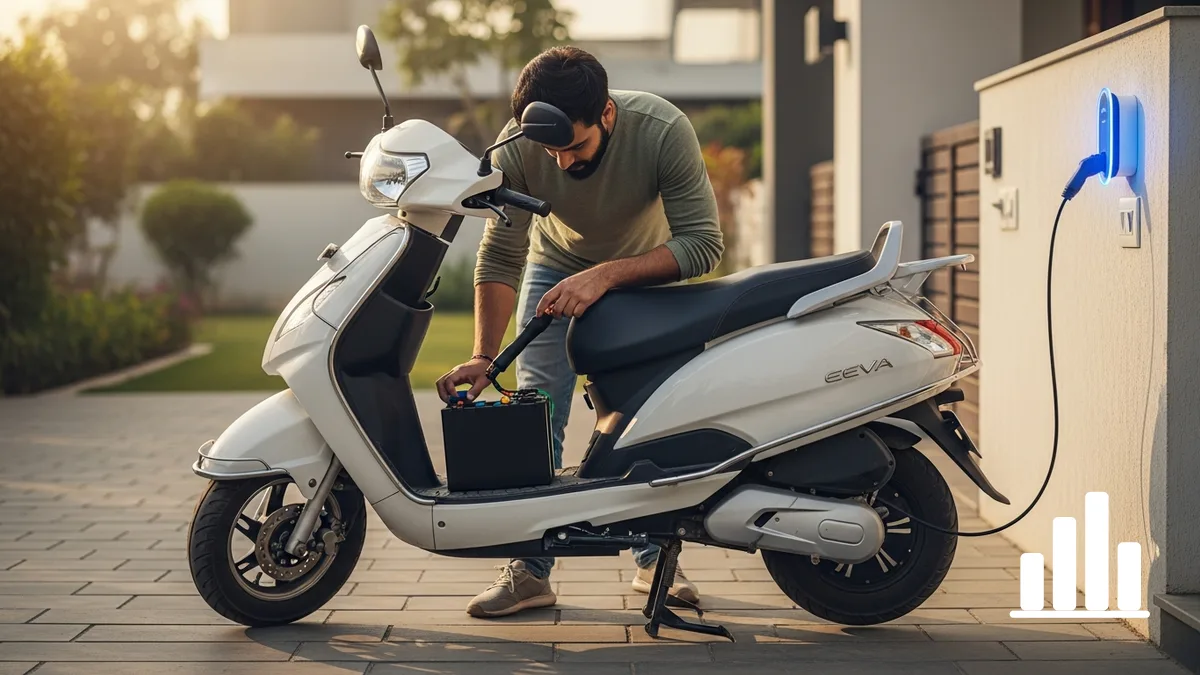
Buying a used low-speed electric scooter in the Tricity: the checks that matter
Buying a second-hand low-speed electric scooter in the Tricity is not the same as buying a used petrol two-wheeler, and it is not the same as buying a…
Read →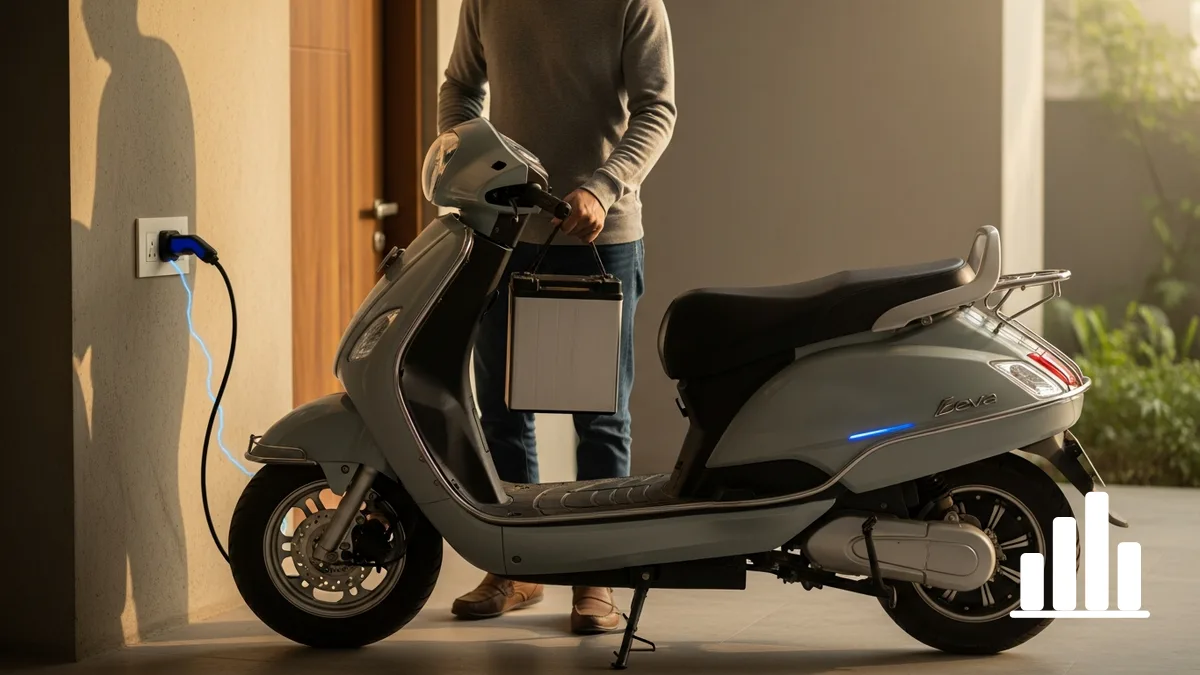
Charging a low-speed EV without a garage: options for Tricity flats
Living in a flat or rented accommodation in the Tricity — Chandigarh, Mohali, Panchkula — does not automatically lock you out of EV ownership. But it does…
Read →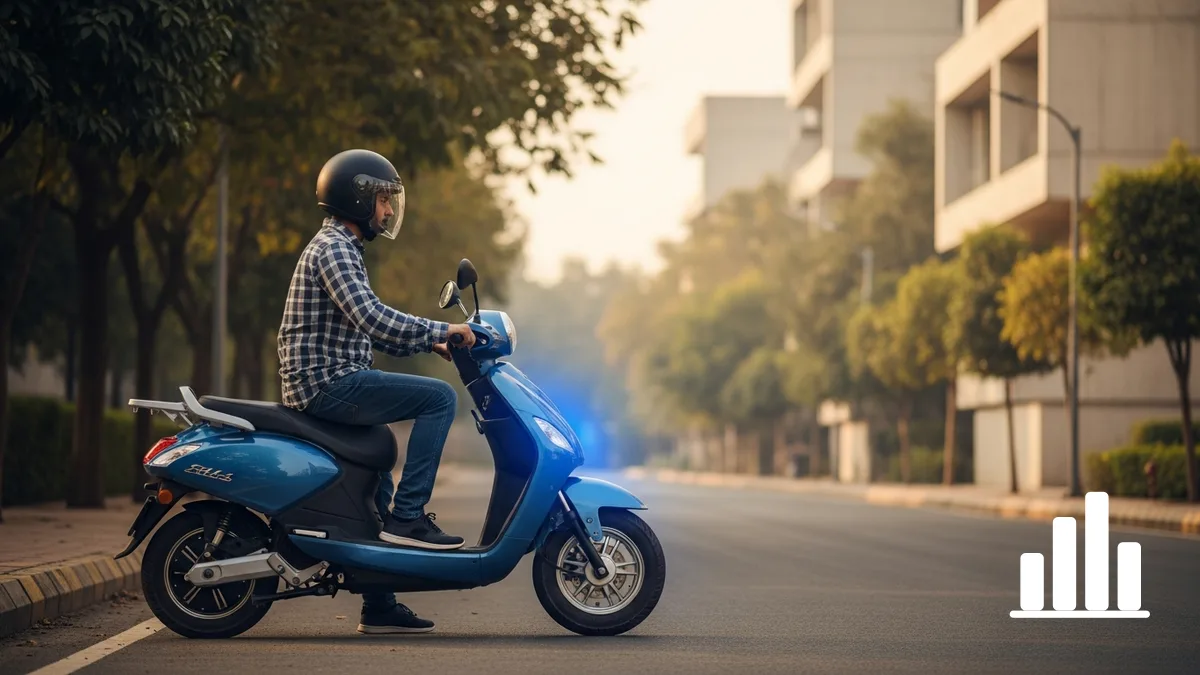
How to choose your first electric scooter — a simple Tricity guide
Thinking about your first electric scooter? Plenty of people in Chandigarh, Mohali and Panchkula doing 20–40 km a day — students, homemakers, delivery workers — ask the same questions. This guide answers them, without pushing any one brand.
Read →