Buying a low-speed e-scooter: the mistakes to avoid (a Tricity checklist)
Buying a low-speed electric scooter in the Tricity looks simple on paper: no licence, no registration, ride the same day. But several buyers end up with a…
Why this checklist exists
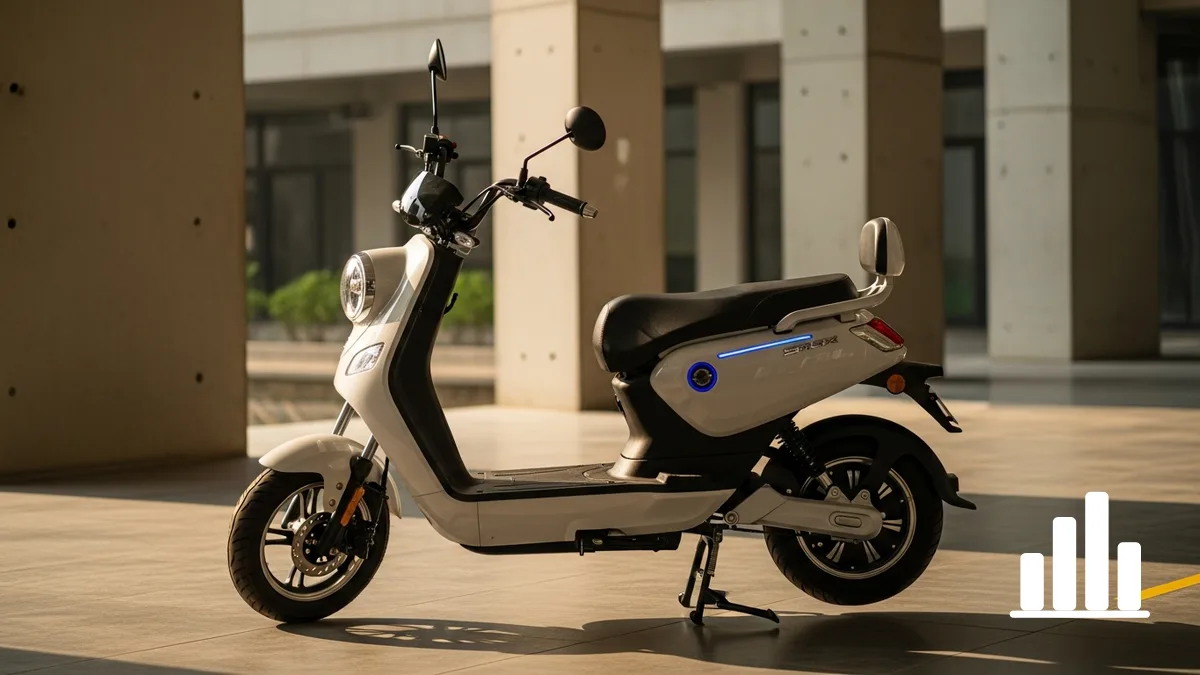
Buying a low-speed electric scooter in the Tricity looks simple on paper: no licence, no registration, ride the same day. But several buyers end up with a vehicle that does not actually qualify for those exemptions, or with a battery they will regret within a year, or with no service centre within a reasonable distance. This guide walks through the most common mistakes, in plain terms, so you can avoid them.
Mistake 1: Assuming speed alone determines the exemption
This is the single most common misunderstanding, and dealers do not always clarify it.
Under the Central Motor Vehicles Rules (CMVR), a two-wheeled electric vehicle is exempt from RTO registration, driving licence, road tax, and number plate only if it meets two conditions simultaneously:
- Top speed of 25 km/h or less, and
- Motor rated at 250 W or less (continuous rated output)
Both conditions must be met. A scooter electronically capped at 25 km/h but fitted with a motor rated above 250 W is still classified as a registrable motor vehicle under the CMVR. You would need a licence, registration, and road tax — which defeats the entire low-cost case for buying in this category.
What to check before signing anything: Ask the dealer to show you the motor specification on the product brochure or the manufacturer’s website. The wording should say “250 W BLDC” or equivalent. If the spec sheet says 350 W, 500 W, or anything above 250 W, the vehicle is not exempt, regardless of its stated top speed. A compliant low-speed model will be specified at a 250 W BLDC hub motor and a 25 km/h top speed — both conditions satisfied. Check the spec sheet for the exact model you are considering; not every brand or trim guarantees it.
The CMVR rules apply identically across Chandigarh (Union Territory), Mohali (Punjab), and Panchkula (Haryana). Day-to-day enforcement can vary slightly between the three administrations, so if you are ever uncertain about a specific vehicle, confirm with your local RTO before purchase.
Mistake 2: Choosing the wrong battery type for your daily distance
Low-speed scooters in this category are available in two battery types: lead-acid (or gel) and lithium-ion. The upfront price difference is real, but so is the long-term difference in ownership experience.
Lead-acid: Lower purchase price. Heavier. Charges in roughly 7 to 12 hours. Better suited for shorter daily distances of around 15 to 30 km where overnight charging is convenient.
Lithium-ion: Higher upfront cost. Lighter. Charges in roughly 4 to 5 hours. Better suited for daily distances above approximately 60 km. Longer usable life in most conditions.
To put numbers to it: on the same model, the lithium-ion variant typically costs roughly Rs 10,000 to Rs 20,000 more than the lead-acid version ex-showroom. Whether that premium is worth paying depends almost entirely on how far you ride each day.
As a working rule, verified in the model specifications: if your regular daily round trip is above roughly 60 km, choose lithium-ion. Below that, lead-acid is serviceable and keeps the entry cost low.
On running cost, the battery type does not significantly change the per-km figure. At approximately Rs 5 per unit (the realistic all-in basis for Tricity households, accounting for fixed charges and electricity duty alongside the energy charge, per the JERC tariff order effective November 2025), a full charge consumes about 2 units and costs roughly Rs 10. Across a 60 km range, that works out to approximately Rs 0.17 per km — well below what a petrol vehicle costs for the same distance.
A specific Chandigarh note: households on the lowest domestic slab under the JERC tariff pay around Rs 2.75 per unit and will see slightly lower running costs. Households in the 151 to 400-unit band pay around Rs 4.80 per unit, and above 400 units approximately Rs 5.40 per unit. Mohali (PSPCL, Punjab) and Panchkula (Haryana, UHBVN) sit at around Rs 5.40 per unit. The Rs 5 per unit basis is a fair and honest working average for most Tricity users.
Mistake 3: Not reading the warranty carefully
A “2-year warranty” on a low-speed scooter can mean different things from different manufacturers. Some cover only the motor or controller. Some include the frame. Some exclude the battery entirely, which is often the most expensive component to replace.
Before purchasing, get the warranty terms in writing and check specifically:
- Is the battery covered, and for how long?
- Is coverage on the motor and controller unlimited in kilometres, or is there a cap?
- Is the frame included?
- What voids the warranty — specifically, does using a third-party charger or riding in rain void it?
Do not rely on a verbal assurance at the dealership. Ask for the warranty card or certificate and read it before payment.
Mistake 4: Not verifying the service network in your part of the Tricity
A national service network figure — some brands list several hundred authorised service centres across India — tells you very little about what is actually accessible from your address in Sector 22, Zirakpur, or Sector 10 Panchkula.
Before buying any low-speed scooter, confirm:
- The nearest authorised service centre to your home or office, and how far it is
- Whether that centre stocks spare parts for your specific model
- Typical wait time for a service appointment
This matters more for low-speed scooters than for a petrol two-wheeler, because low-speed EVs are a smaller category and not every multi-brand workshop will know how to service them. An authorised centre in Mohali Phase 2 may not help you much if you live on the Panchkula side and do not have easy daily transport alternatives.
Ask for the service centre address at the time of purchase, not after a breakdown.
Mistake 5: Expecting PM E-DRIVE subsidy on a low-speed scooter
This is the most expensive misunderstanding on this list.
The PM E-DRIVE scheme — the central government’s current EV incentive programme under the Ministry of Heavy Industries — provides up to Rs 5,000 per registered electric two-wheeler (calculated at Rs 2,500 per kWh, capped at Rs 5,000 per vehicle). It applies to registered, high-speed electric two-wheelers with lithium-ion batteries, priced ex-factory up to Rs 1.5 lakh.
Low-speed scooters do not qualify. They are CMVR-exempt, meaning they are unregistered vehicles. PM E-DRIVE requires RTO registration as a condition. Additionally, many entry-level low-speed scooters use lead-acid batteries, which are a further exclusion. The scheme’s deadline for registered electric two-wheelers is 31 July 2026, subject to funds being available — but that date is irrelevant to a low-speed buyer.
If a dealer suggests you can claim PM E-DRIVE on a low-speed scooter, that is incorrect. Do not factor it into your budget.
The correct way to think about the financial case for a low-speed scooter is avoided cost, not subsidy:
- No registration or green number plate (a modest one-time saving)
- No road tax (Rs 0 on any electric two-wheeler in the Tricity, even when registered)
- No driving licence requirement (minimum age 16, not 18)
- No mandatory insurance — the avoided third-party cover is roughly Rs 1,500 to Rs 3,000 a year, the real recurring saving (though voluntary cover is available and worth considering — some legal interpretations argue third-party cover is still required under the Motor Vehicles Act even for exempt vehicles, so confirm the current position with your local RTO)
- Total on-road cost equals the ex-showroom price — nothing added
That avoided-cost stack, combined with the ~Rs 0.17 per km running cost, is the genuine financial argument for this category.
The Tricity checklist: before you hand over the money
Use this list at the dealership or before placing an order online:
- Confirm the motor is rated at 250 W or less (not just the speed cap) — ask for the spec sheet
- Confirm the top speed is 25 km/h or less on the same spec sheet
- Decide on battery type based on your realistic daily distance — lead-acid if under ~60 km/day, lithium-ion if above
- Read the warranty document — check battery coverage, km cap (if any), and what voids it
- Physically confirm the nearest authorised service centre for your area in Chandigarh, Mohali, or Panchkula
- Do not include PM E-DRIVE in your cost calculations — it does not apply to this category
- If in doubt about insurance requirements for your specific vehicle, ask your local RTO (Chandigarh UT, Mohali/SAS Nagar, or Panchkula) before riding
- Verify the current ex-showroom price directly from the manufacturer’s website or an authorised dealer — prices vary by battery variant and may change
A note on prices in this article
Model prices cited here are approximate ex-showroom figures from verified trade listings as of June 2026. Prices vary by battery variant (lead-acid versus lithium-ion), by state (UT, Punjab, Haryana attract different charges), and over time. Always confirm the current price at the point of purchase. Some models in the low-speed category have price or range figures that should be verified directly with the dealer before committing.
Sources
- Central Motor Vehicles Rules (CMVR) — licence and registration exemption criteria for low-speed EVs, cross-verified June 2026
- Joint Electricity Regulatory Commission (JERC) five-year tariff order (FY 2025-26 to 2029-30), effective 1 November 2025 — Chandigarh domestic tariff slabs; The Tribune, October/November 2025
- PSPCL (Punjab) domestic tariff — Mohali running-cost basis
- UHBVN (Haryana) domestic tariff — Panchkula running-cost basis
- PM E-DRIVE scheme — pmedrive.heavyindustries.gov.in and Ministry of Heavy Industries trade press, June 2026
- Manufacturer sites (including Komaki, Hero Electric, Deltic, Kinetic Green and Zelio) — model specifications, motor ratings, battery variants, service networks; verified June 2026
Independent editorial — EV Chandigarh doesn't sell vehicles. We explain the rules and the numbers, then point you to where to buy.
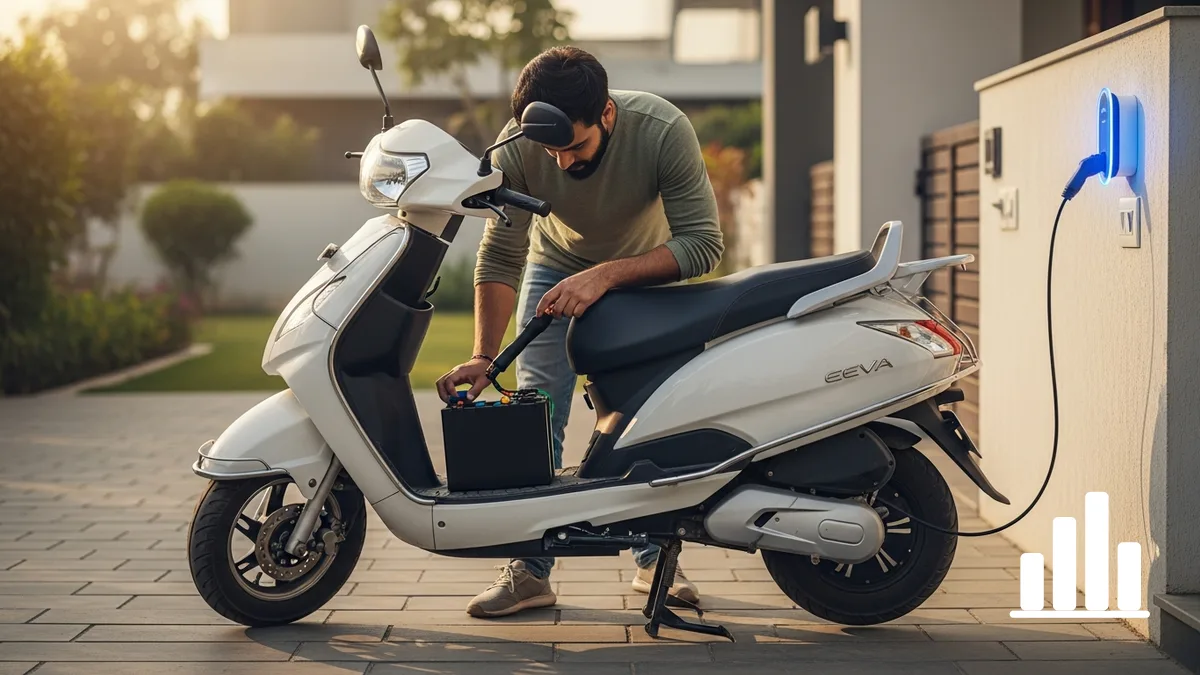
Buying a used low-speed electric scooter in the Tricity: the checks that matter
Buying a second-hand low-speed electric scooter in the Tricity is not the same as buying a used petrol two-wheeler, and it is not the same as buying a…
Read →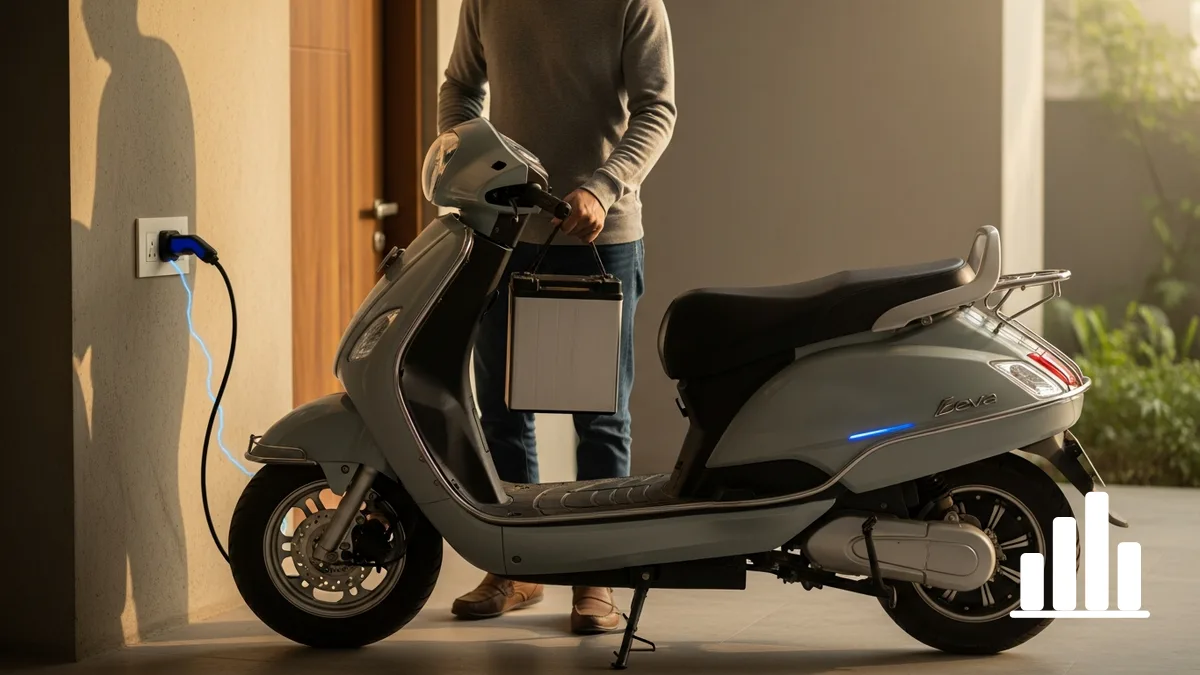
Charging a low-speed EV without a garage: options for Tricity flats
Living in a flat or rented accommodation in the Tricity — Chandigarh, Mohali, Panchkula — does not automatically lock you out of EV ownership. But it does…
Read →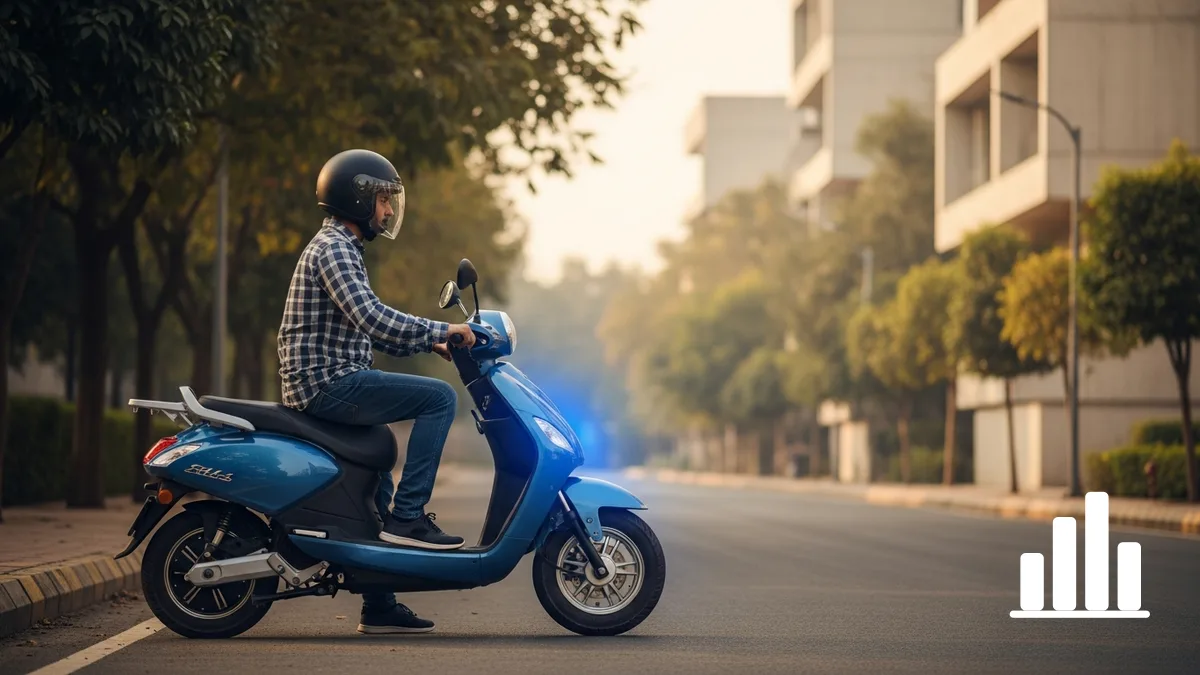
How to choose your first electric scooter — a simple Tricity guide
Thinking about your first electric scooter? Plenty of people in Chandigarh, Mohali and Panchkula doing 20–40 km a day — students, homemakers, delivery workers — ask the same questions. This guide answers them, without pushing any one brand.
Read →