Best low-speed EV for delivery and gig workers in the Tricity
If you are doing food delivery, courier runs, or any gig or small-business work in Chandigarh, Mohali, or Panchkula, you are probably covering 40 to 80 km…
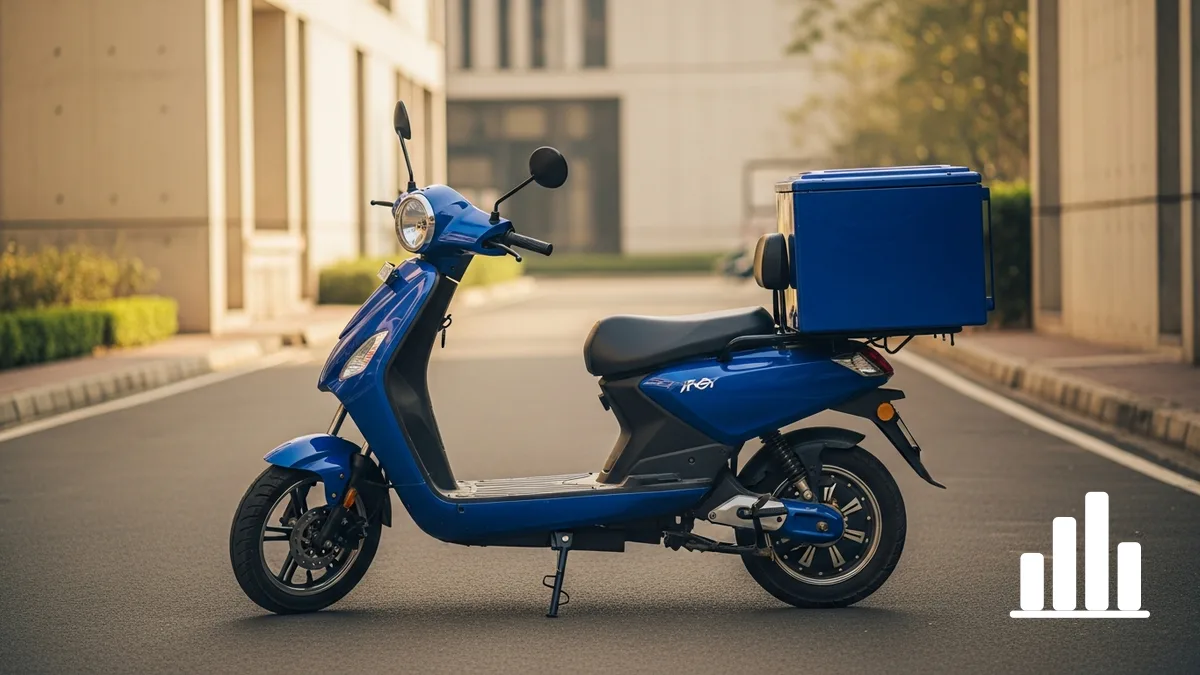
Who this guide is for
If you are doing food delivery, courier runs, or any gig or small-business work in Chandigarh, Mohali, or Panchkula, you are probably covering 40 to 80 km every working day. That changes the calculation compared to a student doing a 5 km campus run. Range matters more. Running cost matters more. And the ability to start riding the day you buy — without a licence, an RTO visit, or a road-tax payment — matters quite a lot when you are watching every rupee. This guide works through those numbers honestly, names the right models for this use case, and does not gloss over what a low-speed scooter cannot do.
The 25 km/h cap — read this first
Every scooter in this guide is a low-speed electric two-wheeler. Under the Central Motor Vehicles Rules (CMVR), a two-wheeler is exempt from RTO registration, a driving licence, road tax, and a number plate if it meets two conditions simultaneously: a top speed of 25 km/h or less, and a motor rated at 250 W or less (continuous). Both conditions must be met — speed alone is not enough.
This has real consequences for delivery work. You will not keep up with cars on a 60 km/h arterial road, and you should not try. These scooters belong in residential sectors, internal colony roads, market areas, and lighter urban streets. The Phase routes in Mohali, the sectors in Chandigarh, and the MDC and residential pockets in Panchkula are well suited to this pace. Zomato and Swiggy runs inside a densely packed sector or market cluster are a practical fit. Point-to-point courier work across the full Tricity at speed is not.
If your delivery routes require sustained highway speeds, a low-speed scooter is the wrong tool. That is worth saying plainly at the outset.
What exemption from registration actually saves you
The CMVR exemption means the on-road cost of a low-speed scooter equals the ex-showroom price. Nothing is added on top. No RTO registration, no green number plate, no compulsory insurance premium. The recurring saving is the avoided mandatory insurance — roughly Rs 1,500 to Rs 3,000 a year — on top of a modest one-time registration/plate saving. (Road tax is Rs 0 on a Tricity electric two-wheeler even when registered, so it is not a low-speed-only saving.) That is a modest saving in itself, but the larger saving is operational: you can ride the day you buy, you carry no renewal obligations, and there is no RTO paperwork to manage.
One important nuance: third-party insurance is not legally mandated for CMVR-exempt low-speed scooters, but the position is not entirely black and white — some readings of the Motor Vehicles Act argue third-party cover is still required, and on-ground enforcement varies across the UT, Punjab, and Haryana. Voluntary cover is available and worth considering for anyone using these vehicles commercially. Confirm the current position with your local RTO before deciding.
The minimum age to ride is 16, under CMVR.
Running cost — the core case for gig work
For delivery and gig workers, fuel is a direct operating cost. The math here is straightforward.
A full charge on a typical low-speed scooter uses approximately 2 units of electricity. Using roughly Rs 5 per unit as an honest all-in basis — the JERC tariff order for Chandigarh (effective 1 November 2025, covering FY 2025-26 to 2029-30) shows domestic rates ranging from around Rs 2.75 per unit at the lowest slab to around Rs 5.40 per unit above 400 units, and PSPCL rates for Mohali sit around Rs 5.40 per unit for the first 300 units — a full charge costs approximately Rs 10. Over a range of around 60 km, that works out to roughly Rs 0.17 per km, per verified charging-cost data.
The petrol equivalent for the same distance costs in the range of Rs 150 to Rs 200. That comparison is not cherry-picked; it reflects the verified cost figures available for this segment.
For a gig worker doing 60 km a day across 25 working days a month, the fuel saving versus a petrol two-wheeler is substantial. The exact figure depends on your specific route distance and electricity slab, but the direction is not in doubt.
Chandigarh’s lower domestic slabs do benefit lighter users, but heavier daily charging will push costs toward the higher slabs. Treat Rs 0.17 per km as a fair working number, not a best-case figure.
Why lithium-ion matters for high daily distances
Low-speed scooters are available with either lead-acid or gel batteries, or lithium-ion batteries. For someone doing 40 to 80 km a day, the battery choice matters more than the model badge.
As a rule across the low-speed class: for daily distances above around 60 km, lithium-ion is preferable over lead-acid for better range, longer cycle life, and lower weight. Lead-acid variants charge in roughly 7 to 12 hours; lithium-ion in roughly 4 to 5 hours. If you are doing a second shift or need a midday top-up, charge time is a real operational variable.
The range figures below refer to lithium-ion variants unless otherwise noted. Always confirm the exact battery configuration with the dealer before purchasing, as prices and range differ between battery types.
What a strong long-range pick looks like
For delivery and gig work the brand matters far less than the spec. Start from what the job demands, then shortlist any model — from any brand — that actually meets it:
- A real range of 90 km or more. Not the brochure figure — the range under working load, on a lithium or LFP battery. Ask the dealer what to expect with cargo, not on an empty test ride.
- A removable battery. If you park upstairs or away from a socket, being able to carry the battery in to charge is the difference between practical and painful.
- Payload and pulling power. Enough rated payload for your load, and enough gradeability for Panchkula’s outer-sector slopes without the range collapsing.
- Lithium, not lead-acid, for anything above roughly 50 km a day — lighter, longer-lived and faster to charge.
That set of demands defines the long-range / work class: roughly a 90–110 km real-world range and a ₹60,000–95,000 typical price band. Several brands build to it — for example the Deltic Legion, Komaki XGT VP and Zelio Logix are positioned here. Treat those as illustrations of the class, not a ranking: confirm the exact variant, the loaded range and the local ex-showroom price before you decide, and check the motor is rated ≤250W so the model stays licence-free.
A lighter everyday step-through (70–85 km, ₹45,000–60,000 — think the Hero Electric Flash LX, Deltic Costa or Zelio Gracy i) can still work if your daily distance reliably stays under 60–70 km. Below that an entry commuter is enough; consistently above 90 km a day, stay in the long-range class.
The honest limits
A low-speed scooter at 25 km/h is not a replacement for a petrol bike on all delivery types. These are the constraints to weigh honestly:
- Speed cap. 25 km/h is the legal and mechanical ceiling. You cannot ride these safely or legally at higher speeds.
- Range under load. Carrying cargo will reduce the stated range. How much depends on payload weight and terrain. Ask the dealer what range to expect under working load, not just an unloaded test.
- Charging infrastructure. You are charging at home or at a socket, not at a fuel station. If you live in a ground-floor unit or have access to a standard socket, this is straightforward. Upper-floor apartments without dedicated parking access may be a practical challenge — worth sorting before purchase.
- Terrain. The Tricity is largely flat, which suits these scooters well. Panchkula’s outer sectors and the foothills near Morni involve gradients that can reduce range noticeably on lead-acid variants.
- No subsidy. Low-speed CMVR-exempt scooters do not qualify for PM E-DRIVE or any current central government subsidy scheme. The value case rests entirely on avoided operational costs and the low running cost — not on upfront incentives. Anyone telling you otherwise should be asked for documentary proof.
A note on the Tricity specifically
The three cities operate under the same CMVR rules, but administration sits across three different jurisdictions: Chandigarh is a Union Territory, Mohali falls under Punjab, and Panchkula under Haryana. The exemption criteria are identical, but day-to-day enforcement can vary slightly between the UT and the two state jurisdictions. If you are operating commercially and have any doubt about how the exemption applies to your specific use, confirm with your local RTO — in Sector 17 for Chandigarh, or the relevant Punjab or Haryana transport office for Mohali and Panchkula.
Electricity tariffs also differ marginally: Chandigarh’s lower domestic slabs (JERC, effective November 2025) can be cheaper for modest daily charging, while Mohali (PSPCL) and Panchkula (UHBVN/Haryana) sit around Rs 5.40 per unit. For a gig worker charging daily, this difference is real but not large — the Rs 0.17 per km figure holds across all three cities at the Rs 5 per unit basis.
What to do before buying
- Confirm the exact battery variant (lead-acid or lithium-ion) and its range for the model you are considering.
- Ask the dealer to confirm the motor wattage in writing — this is the figure that determines CMVR exemption alongside speed, and it matters.
- Confirm the ex-showroom price for your specific city, as prices vary by state.
- Decide on voluntary insurance cover, and check the current RTO position in your jurisdiction.
- If your daily distance consistently exceeds 80 km, discuss this with the dealer and ask specifically about your shortlisted long-range model’s confirmed range under load (the top lithium variant).
Sources
- Central Motor Vehicles Rules (CMVR); cross-verified across multiple sources, June 2026 — for licence, registration, and exemption criteria
- Joint Electricity Regulatory Commission (JERC) / Chandigarh Power Distribution Ltd; The Tribune, October/November 2025 — for Chandigarh domestic tariff (effective 1 November 2025)
- PSPCL (Punjab State Power Corporation Ltd) — for Mohali tariff basis
- Manufacturer sites (including Komaki, Hero Electric, Deltic, Kinetic Green and Zelio) and trade listings; verified June 2026 — for low-speed class specifications and indicative price/range bands
- EV India guidance and manufacturer data; June 2026 — for charging cost and running cost per km figures
- PM E-DRIVE portal (pmedrive.heavyindustries.gov.in) and trade press; June 2026 — for subsidy eligibility confirmation (low-speed scooters are not eligible)
Independent editorial — EV Chandigarh doesn't sell vehicles. We explain the rules and the numbers, then point you to where to buy.
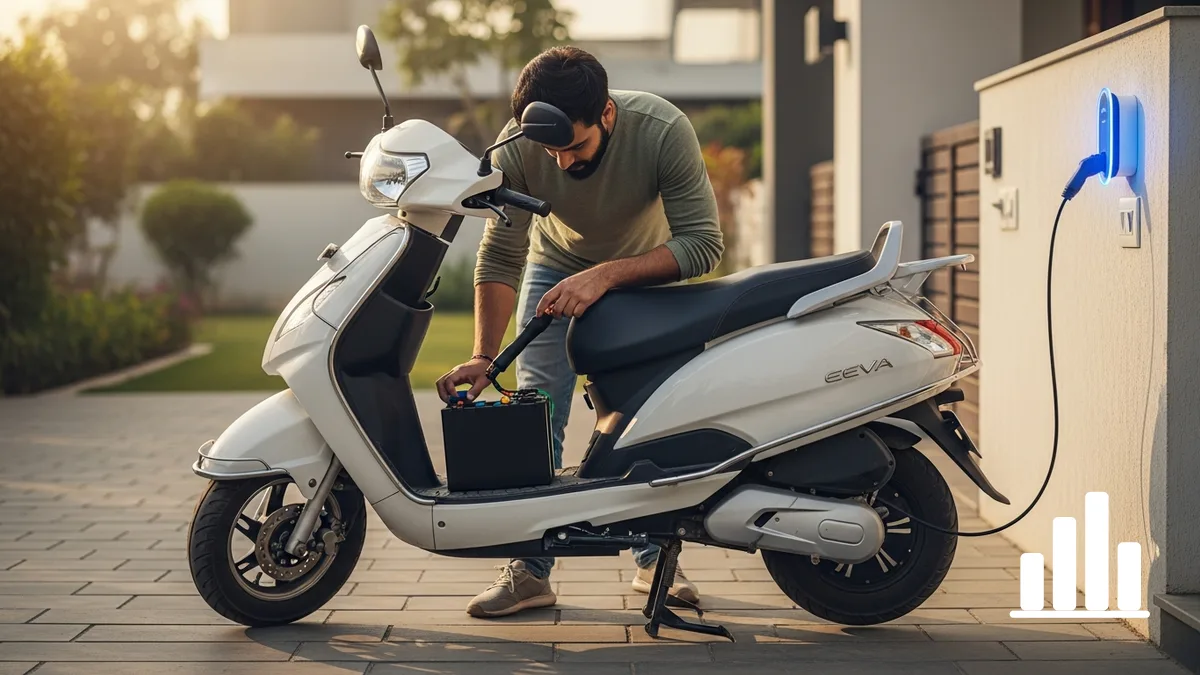
Buying a used low-speed electric scooter in the Tricity: the checks that matter
Buying a second-hand low-speed electric scooter in the Tricity is not the same as buying a used petrol two-wheeler, and it is not the same as buying a…
Read →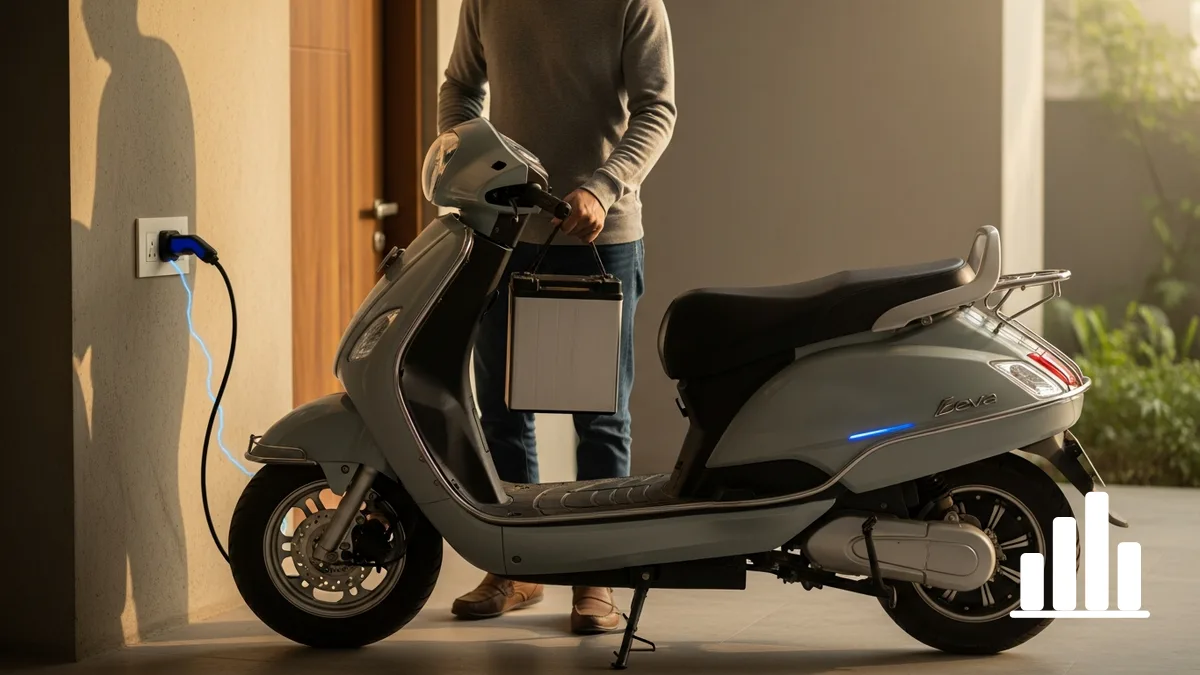
Charging a low-speed EV without a garage: options for Tricity flats
Living in a flat or rented accommodation in the Tricity — Chandigarh, Mohali, Panchkula — does not automatically lock you out of EV ownership. But it does…
Read →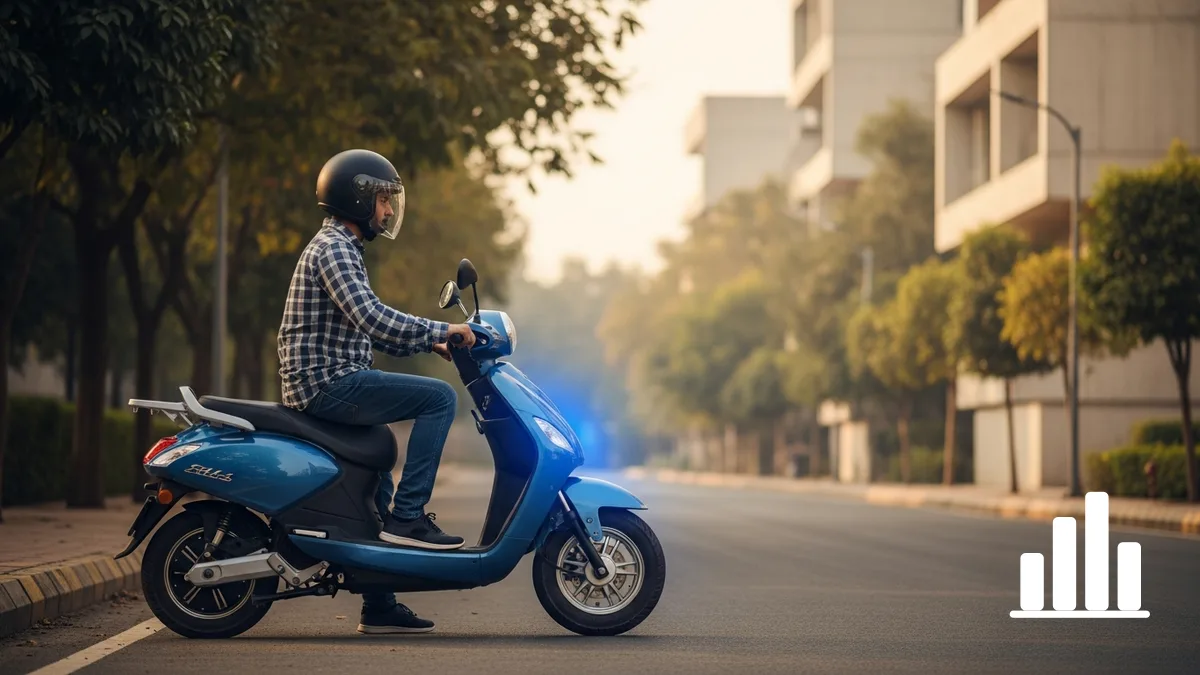
How to choose your first electric scooter — a simple Tricity guide
Thinking about your first electric scooter? Plenty of people in Chandigarh, Mohali and Panchkula doing 20–40 km a day — students, homemakers, delivery workers — ask the same questions. This guide answers them, without pushing any one brand.
Read →