A low-speed electric scooter for seniors and homemakers: easy, no-licence local trips
A low-speed electric scooter is not the right tool for every rider. But for a retired person in Sector 22 who needs to reach the vegetable market and…
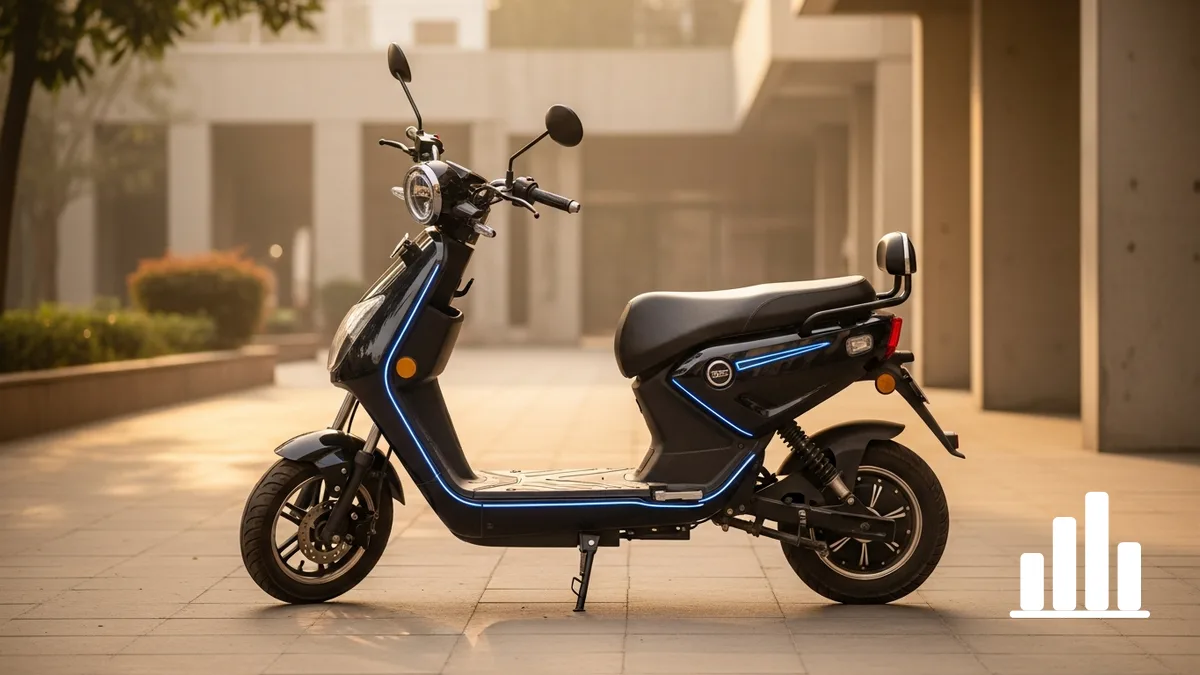
A low-speed electric scooter is not the right tool for every rider. But for a retired person in Sector 22 who needs to reach the vegetable market and back, or a homemaker in Zirakpur who does the school run and a temple visit on most mornings, it may be exactly the right tool — and the paperwork burden is close to zero.
What makes a scooter “low-speed” under Indian law
The Central Motor Vehicles Rules (CMVR) create a clean exemption for electric two-wheelers that meet two conditions simultaneously: the top speed must be 25 km/h or less, and the motor must be rated at 250 watts or less (continuous). Both conditions must be met — not just one.
When both are met, the scooter does not need RTO registration, does not need a number plate, does not attract road tax, and no driving licence is required. The minimum age to ride is 16. You can, in principle, ride the scooter away from the showroom the same day you buy it. The total on-road cost equals the ex-showroom price — nothing more is added.
One point that trips up buyers: a scooter artificially speed-limited to 25 km/h but fitted with a motor rated above 250W does not qualify. It is still classified as a registrable motor vehicle. Always check both figures before purchase, and if you are unsure, ask the dealer to show the motor specification on paper.
On insurance, the picture is not entirely black and white. Mandatory third-party insurance under the Motor Vehicles Act technically applies to motor vehicles, and an exempt low-speed scooter falls outside that definition — but interpretations differ and enforcement varies across Chandigarh (Union Territory), Mohali (Punjab) and Panchkula (Haryana). Voluntary cover is available from general insurers and is worth considering. Confirm the current position with your local RTO before deciding.
The local context: short trips, not long commutes
The Tricity is built around a grid of sectors with markets, gurudwaras, mandirs and schools within a few kilometres of most homes. A low-speed scooter at 25 km/h is entirely adequate for these trips. It is slower than traffic on the main arterials, which is why it is best treated as a neighbourhood vehicle rather than a cross-city one. Used within that scope — Sector 7 to Sector 17, Panchkula Sector 9 to the new grain market, Zirakpur lanes to the school gate — it does exactly what it needs to do.
The low seat height and fully gearless throttle make it accessible to riders who are not comfortable on a conventional scooter. There is no clutch, no gear-change, and no minimum speed to maintain. Stopping and starting in slow bazaar traffic or a crowded parking area requires less physical effort than a petrol scooter. For someone returning to two-wheelers after a long gap, or riding one for the first time, these things matter more than peak power figures.
What it costs to run
Per the JERC tariff order effective 1 November 2025 (covering FY 2025-26 to 2029-30, the first order after Chandigarh Power Distribution Ltd took over supply), Chandigarh domestic electricity runs from roughly Rs 2.75 per unit at the lowest consumption slab to about Rs 5.40 per unit above 400 units. Mohali falls under PSPCL, Punjab, where the rate is around Rs 5.40 per unit for the first 300 units. Panchkula (UHBVN, Haryana) is comparable to the others.
A fair all-in basis for running-cost calculations, accounting for the fixed charge and electricity duty as well as the energy charge, is approximately Rs 5 per unit. A full charge on a typical low-speed scooter uses about 2 units, costing roughly Rs 10. Over a rated range of around 60 km, that works out to approximately Rs 0.17 per kilometre. If you are on a lower slab in Chandigarh, your actual cost will be less — but Rs 0.17 per km is an honest and slightly conservative number to plan around.
To put that in context: the petrol cost for the same 60 km distance, at current Chandigarh pump prices, would be in the range of Rs 150 to Rs 200 depending on the vehicle. The EV does that trip for Rs 10. For someone doing 15 to 20 km a day, five days a week, the cumulative saving over a year is substantial.
Charging happens on a regular 5-amp home socket. There is nothing special to install. Most riders charge overnight, and the scooter is ready by morning.
A note on subsidies — and why they do not apply here
The central government’s PM E-DRIVE scheme (administered by the Ministry of Heavy Industries) offers an incentive of up to Rs 5,000 on registered electric two-wheelers with a lithium-ion battery and an ex-factory price up to Rs 1.5 lakh. That scheme requires RTO registration.
Low-speed scooters that qualify for the CMVR exemption are not registered — that is precisely their advantage. As unregistered vehicles, they do not qualify for PM E-DRIVE. There is no subsidy to claim here, and any dealer who implies otherwise should be questioned carefully.
The value of a low-speed scooter lies entirely in avoided cost: no registration or green-plate cost (a modest one-time amount), no licence cost, and — the recurring one — no mandatory insurance premium, which would run roughly Rs 1,500 to Rs 3,000 a year, with running costs close to zero. (Road tax is Rs 0 on an electric two-wheeler in the Tricity even when registered.) That is a different and equally legitimate calculation — it just works differently from the subsidy route.
What models look like in this class
For a homemaker or a senior doing local errands, two spec classes cover almost every need — so shop by class and spec, not by brand. The figures below are typical price bands; confirm the exact price, battery variant and real range with your local dealer, as they vary by variant, state and over time. The brands named are examples of each class, not recommendations.
-
Entry commuter — around ₹35,000–45,000, roughly 60–70 km real range, in a light compact step-through with a low seat height and fully gearless operation. Best for short daily trips of 15 to 20 km, and for first-time or older riders. Examples across brands: Komaki X-One, Kinetic Green Zing, Zelio Little Gracy.
-
Everyday step-through — around ₹45,000–60,000, roughly 70–85 km on a lithium battery, with fuller moped ergonomics and a more comfortable ride. Best if your daily distance is a little longer, or you carry groceries and tiffin boxes. Examples across brands: Hero Electric Flash LX, Deltic Costa, Zelio Gracy i.
All models in this class share the ≤250W BLDC hub motor and ≤25 km/h top speed that qualify them for the CMVR exemption — ask for the motor wattage in writing so the model stays licence-free. A well-established brand will have an authorised service network; confirm there is a centre covering your area before purchasing.
Battery choice matters. Lead-acid variants cost less upfront but are heavier and take 7 to 12 hours to charge. Lithium-ion variants are lighter, charge in 4 to 5 hours, and last significantly longer. For daily distances above roughly 60 km, the lithium-ion variant is the sensible choice.
Practical considerations for Tricity buyers
Chandigarh (UT): The CMVR rules apply as central law. Day-to-day enforcement by Chandigarh traffic police can vary; if asked, you should be able to show the motor specification to confirm the 250W rating.
Mohali (Punjab) and Panchkula (Haryana): The same CMVR rules apply, but the state transport departments handle on-ground interpretation. Carry the vehicle’s documentation showing motor wattage and speed rating. If there is any ambiguity — for example, if you are buying a model you have not personally verified against both criteria — confirm with the Mohali or Panchkula RTO before riding.
Parking: Low-speed scooters are light enough to be pushed into a lift in many apartment buildings, which removes the ground-floor parking problem that troubles many Tricity flat-owners.
Weather: Chandigarh summers are harsh. Most low-speed scooters are not covered vehicles. If you will use it heavily in May and June, factor in the discomfort of riding in direct sun, and consider whether a morning or evening timing for errands suits you better.
What this category is not
A low-speed scooter at 25 km/h is not safe or appropriate for the Chandigarh-Mohali or Chandigarh-Panchkula road links, where traffic moves at 50 to 60 km/h or faster. It is a neighbourhood vehicle. Using it on high-speed arterials creates a real safety risk. Treat it as a replacement for the two-kilometre walk to the market, not as a substitute for a full-size scooter or car.
Sources
- Central Motor Vehicles Rules (CMVR) — low-speed electric vehicle exemption; cross-verified June 2026
- Joint Electricity Regulatory Commission (JERC) / Chandigarh Power Distribution Ltd — five-year tariff order, effective 1 November 2025; reported in The Tribune, October/November 2025
- PSPCL (Punjab State Power Corporation Ltd) — domestic tariff for Mohali, current as of June 2026
- PM E-DRIVE scheme — Ministry of Heavy Industries (pmedrive.heavyindustries.gov.in); June 2026
- Zelio E-Mobility (zelioebikes.com) — model specifications and pricing; verified June 2026
Prices and specifications were correct at the time of writing but should be confirmed with your local dealer before purchase. Tariff figures should be re-verified if you are reading this after the current JERC order period.
Independent editorial — EV Chandigarh doesn't sell vehicles. We explain the rules and the numbers, then point you to where to buy.
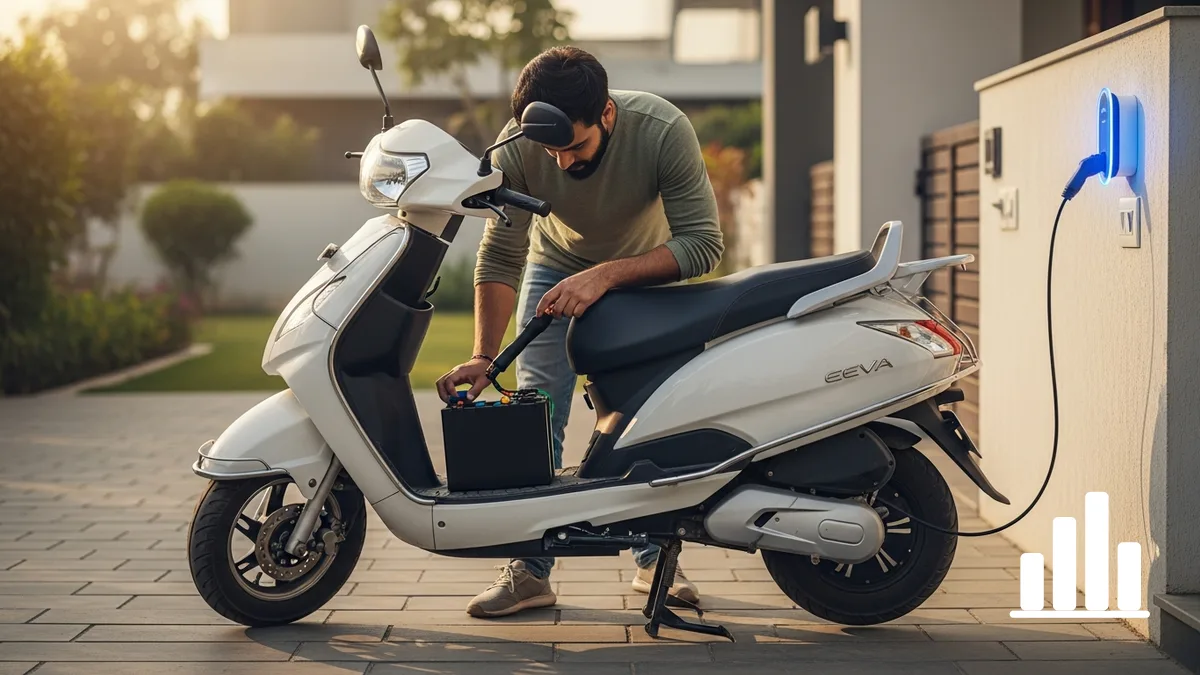
Buying a used low-speed electric scooter in the Tricity: the checks that matter
Buying a second-hand low-speed electric scooter in the Tricity is not the same as buying a used petrol two-wheeler, and it is not the same as buying a…
Read →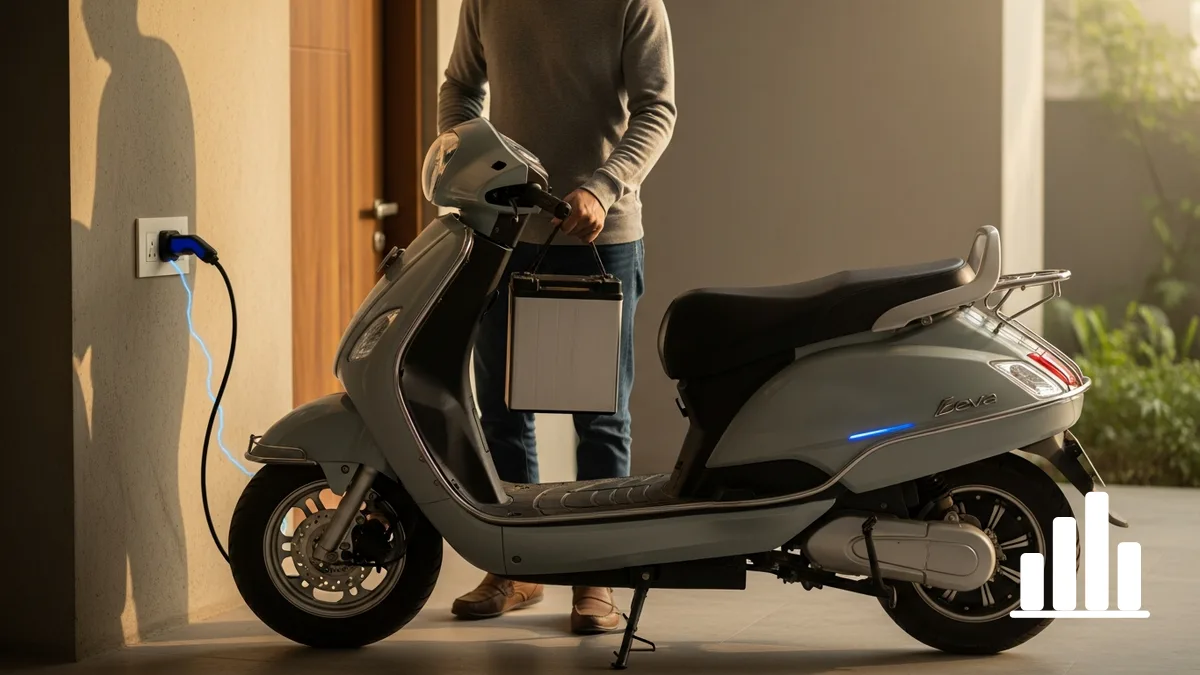
Charging a low-speed EV without a garage: options for Tricity flats
Living in a flat or rented accommodation in the Tricity — Chandigarh, Mohali, Panchkula — does not automatically lock you out of EV ownership. But it does…
Read →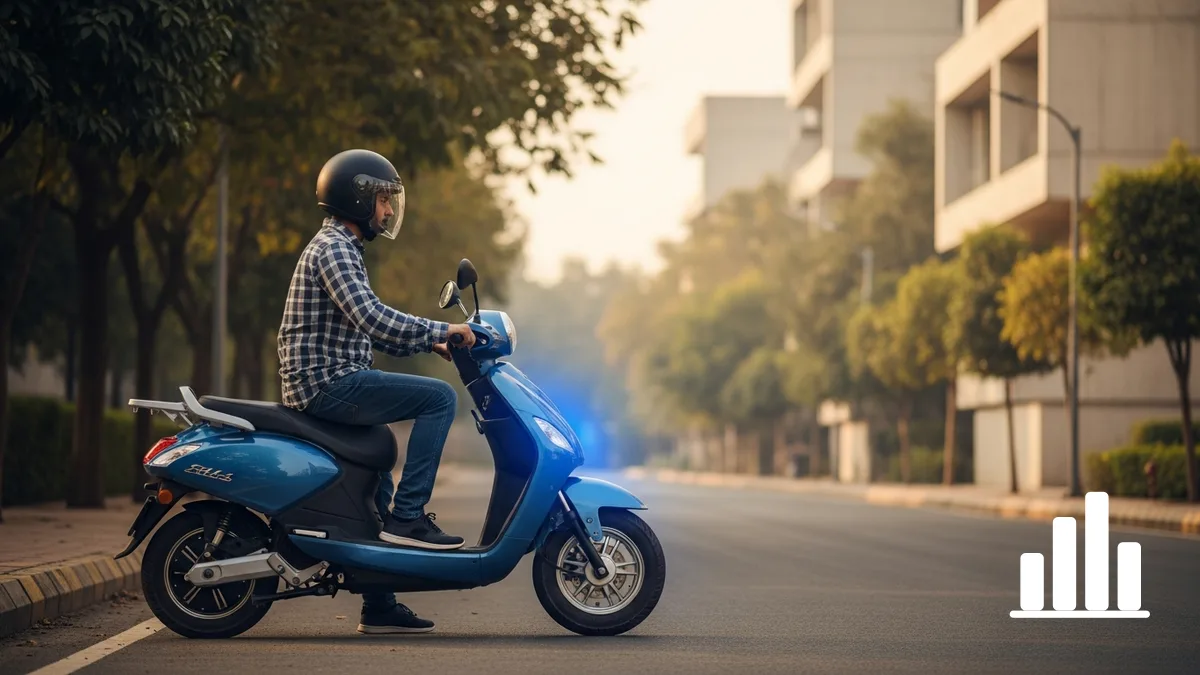
How to choose your first electric scooter — a simple Tricity guide
Thinking about your first electric scooter? Plenty of people in Chandigarh, Mohali and Panchkula doing 20–40 km a day — students, homemakers, delivery workers — ask the same questions. This guide answers them, without pushing any one brand.
Read →